
e-Health: A platform for cardiologist patients
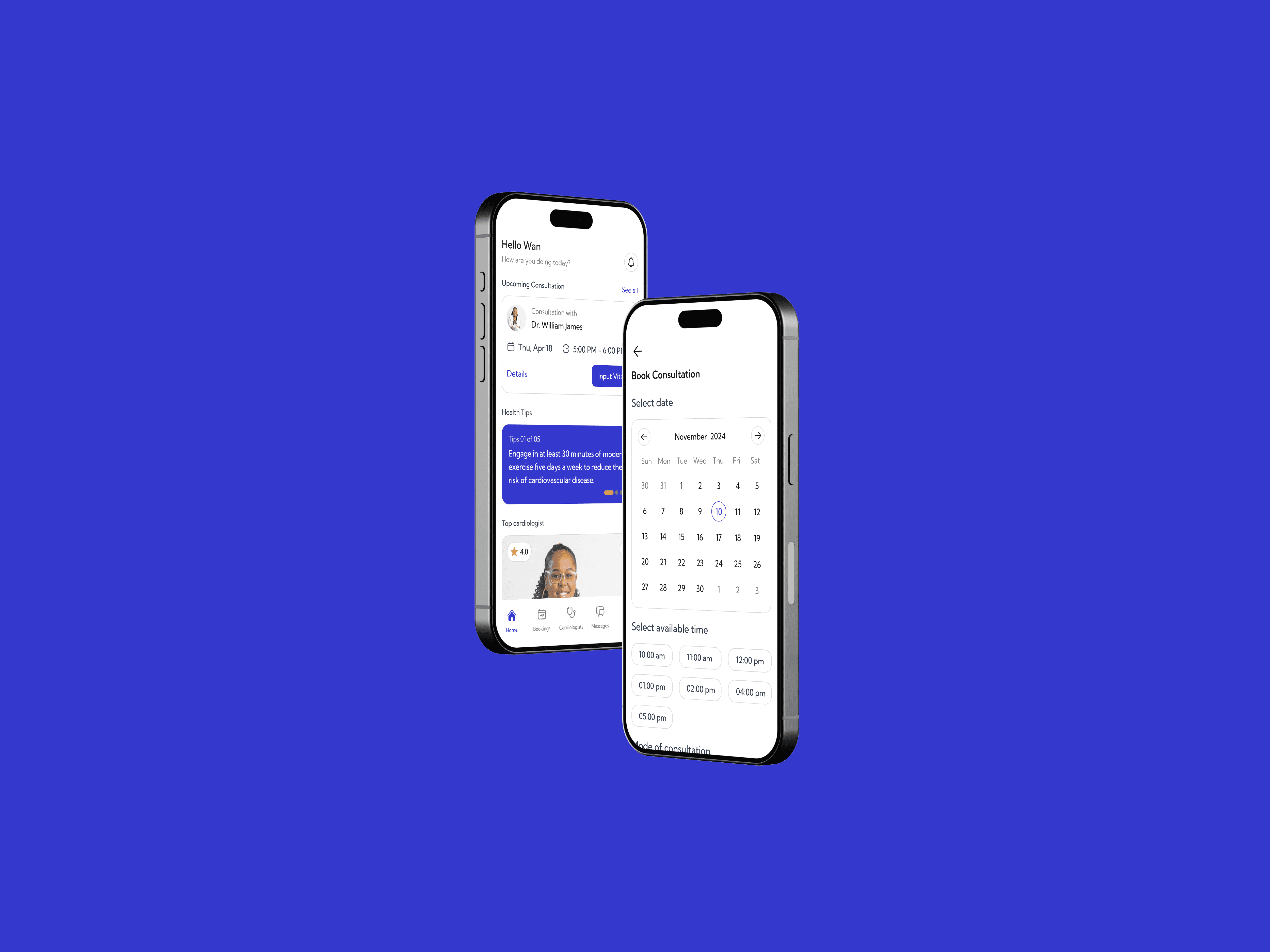
I designed an intuitive eHealth platform focused on cardiology consultations. The goal was to simplify access to specialists, streamline booking, and improve pre- and post-consultation experiences for patients.
Role
Product Designer
Company
e-Health
Year
2023
Platform
Mobile Application
Challenge and Problem
Patients often struggle to find available cardiologists, face complex booking systems, and lack a way to share vitals or maintain consistent follow-ups. This creates gaps in healthcare delivery, especially in Nigeria, where access is already limited.
Hypothesis
If patients could easily book consultations, input vitals (or sync from wearables), and maintain secure communication with specialists, their healthcare journey would become more efficient and impactful.
Constraints
The project was constrained by a limited three-month timeline, technical challenges in integrating with local wearable devices, and budget restrictions that limited extensive prototyping and large-scale testing.
User Research
Surveys revealed that 60% of respondents preferred virtual consultations to avoid traffic, 70% struggled to find available cardiologists, and 45% owned wearables but lacked integration with healthcare systems, while the empathy map highlighted emotions of anxiety about missing care, hope for reliable consultations, and frustration with complex booking processes, leading to the key insight that accessibility, simplicity, and secure communication were the top priorities across all demographics.
Design Process
Discovery & Research
I started by examining how patients access cardiology care, uncovering frustrations like difficulty finding specialists, complex booking systems, and poor integration with wearables. These insights shaped the design direction.
User Flow Mapping
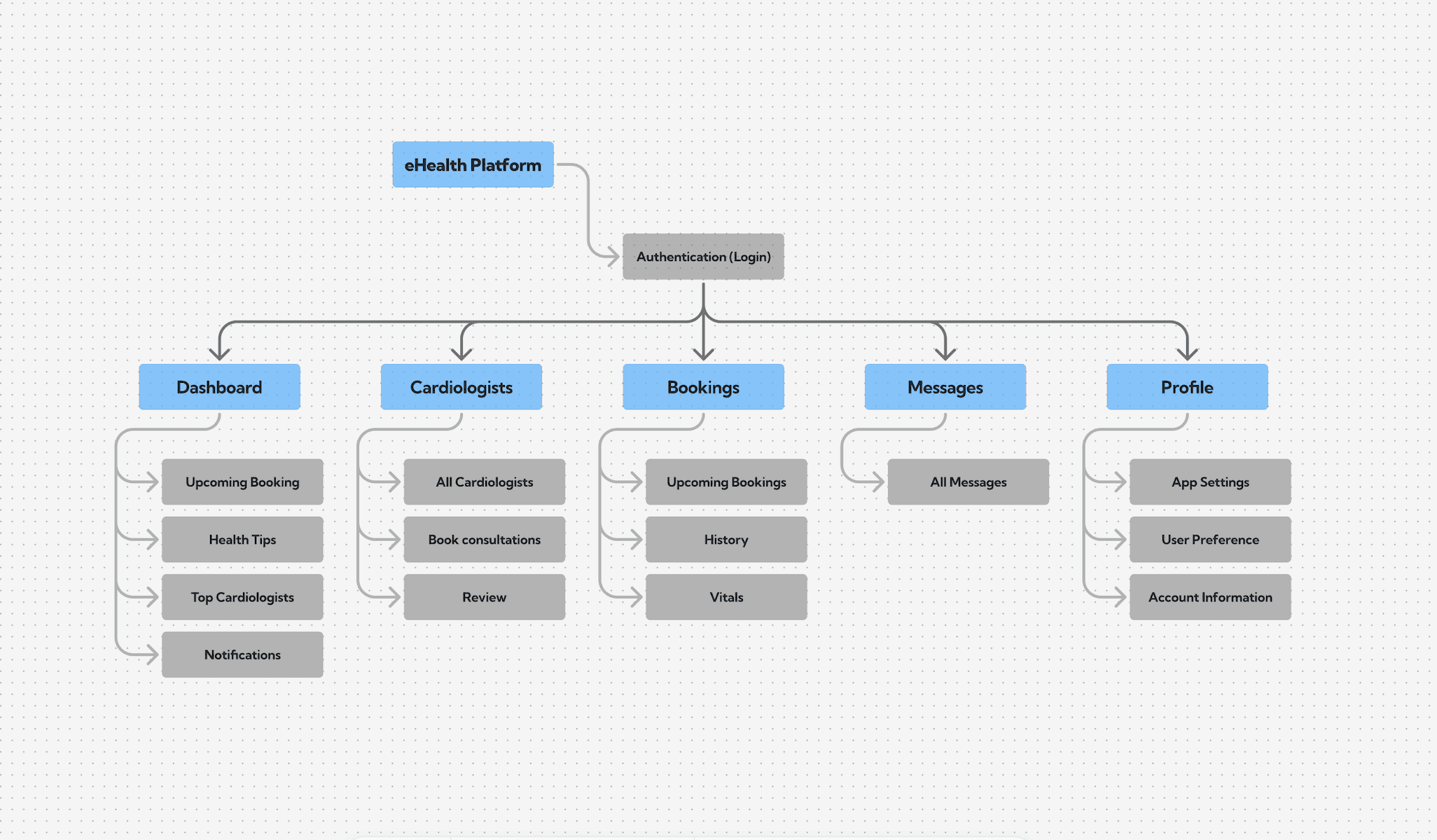
I mapped the end-to-end journey—from booking a consultation to inputting vitals and reviewing follow-up notes—streamlining steps to make the process seamless and intuitive.
Wireframing
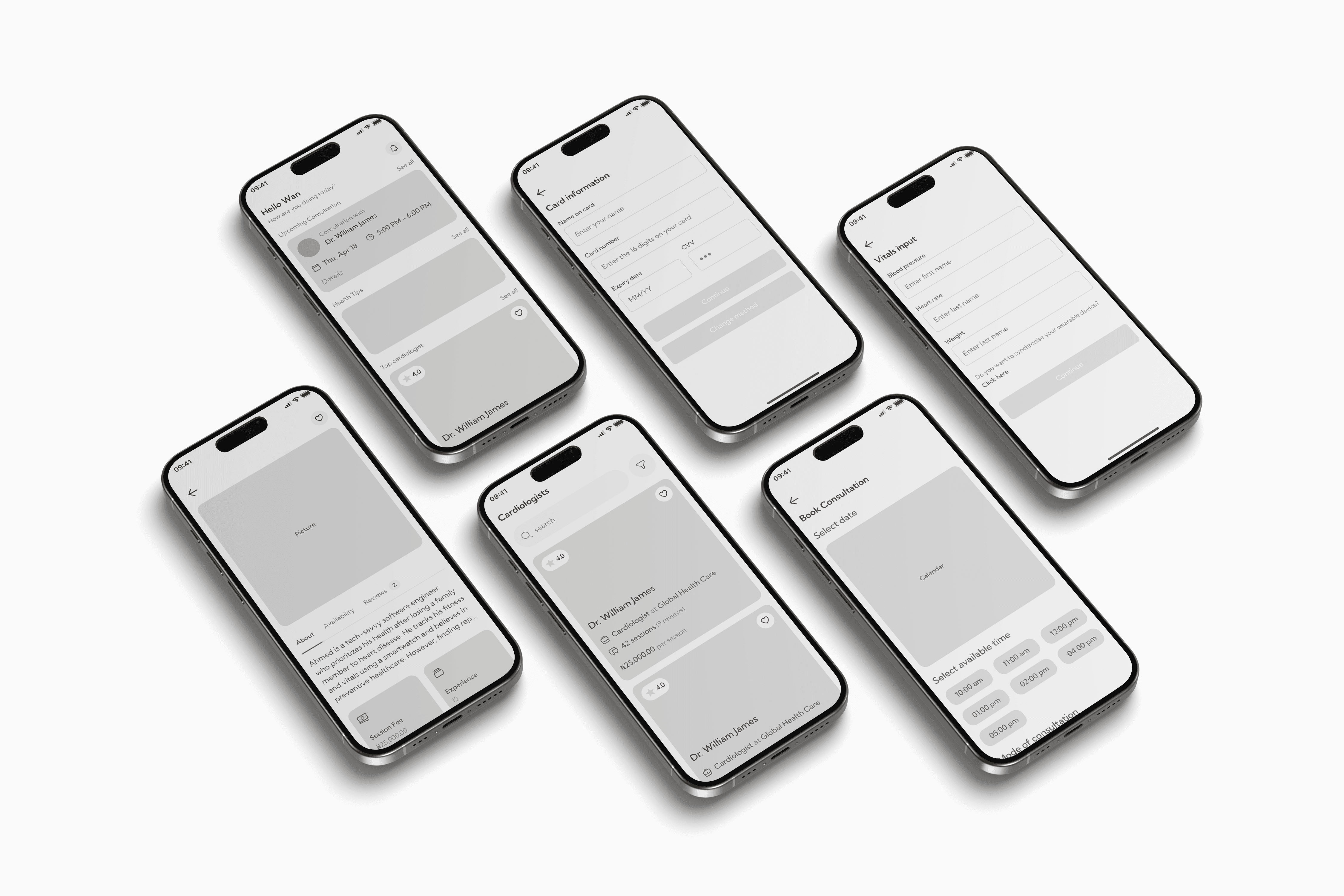
Low-fidelity wireframes outlined key screens such as booking, vitals input, and the dashboard. These early sketches encouraged feedback and ensured alignment before moving forward.
UI Design
Building on validated wireframes, I designed high-fidelity screens in Figma, focusing on simplicity, accessibility, and trust, with a clean, user-friendly interface for all demographics
Prototyping
Finally, I developed an interactive prototype that simulated the full consultation experience, allowing stakeholders to test the flow, guide usability improvements, and prepare for developer handoff.
Key Moments in Design:
01
Simplified booking flow after feedback showed drop-offs.
02
Redesigned navigation bar for better discoverability.
03
Added success modals for reassurance after actions.
Use Cases:
01
Elderly patient booking a consultation with SMS reminders.
02
Caregiver managing multiple family member profiles.
03
Tech user syncing vitals from a smartwatch.
Userflow
I designed clear user flows to map the patient journey, from booking a consultation to inputting vitals and accessing follow-up notes. This ensured that every interaction was intuitive and eliminated unnecessary steps.
Low-fidelity
Early wireframes focused on layout, structure, and functionality rather than visuals. These quick sketches enabled rapid iteration, usability discussions, and validation of core ideas before moving to detailed design.
Assets & Components
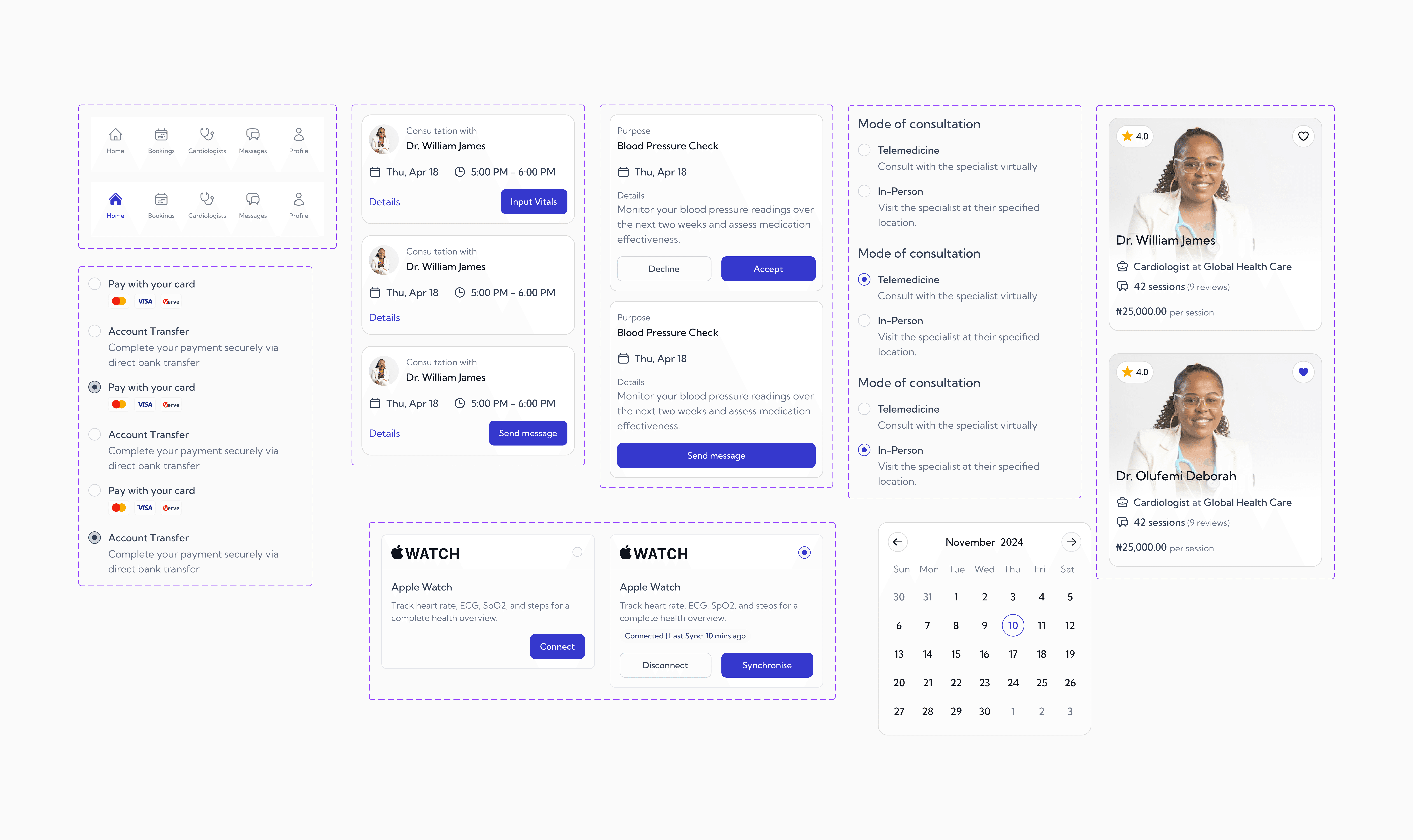
Reusable components such as buttons, input fields, icons, and navigation elements were built into a design system. This ensured consistency across screens, improved efficiency, and simplified future scaling of the platform
Hi- Fidelity
The final screens brought the concept to life with polished UI, clean typography, and accessible color choices. These designs balanced simplicity for elderly users with modern features for tech-savvy patients, building trust and usability.

Reflection & Key Learnings
I learned that accessibility and trust are just as critical as aesthetics, especially in healthcare design. Balancing simplicity for elderly users with advanced features for tech-savvy ones highlighted the need for adaptable solutions. Most importantly, iterative testing early on proved invaluable in refining flows, reducing friction, and building user confidence.

👨🏾💻 Let’s build what users will love.
Available for roles, freelance projects, and collaborations.
Send me an email
©2025