
FoodPlug: A food ordering application
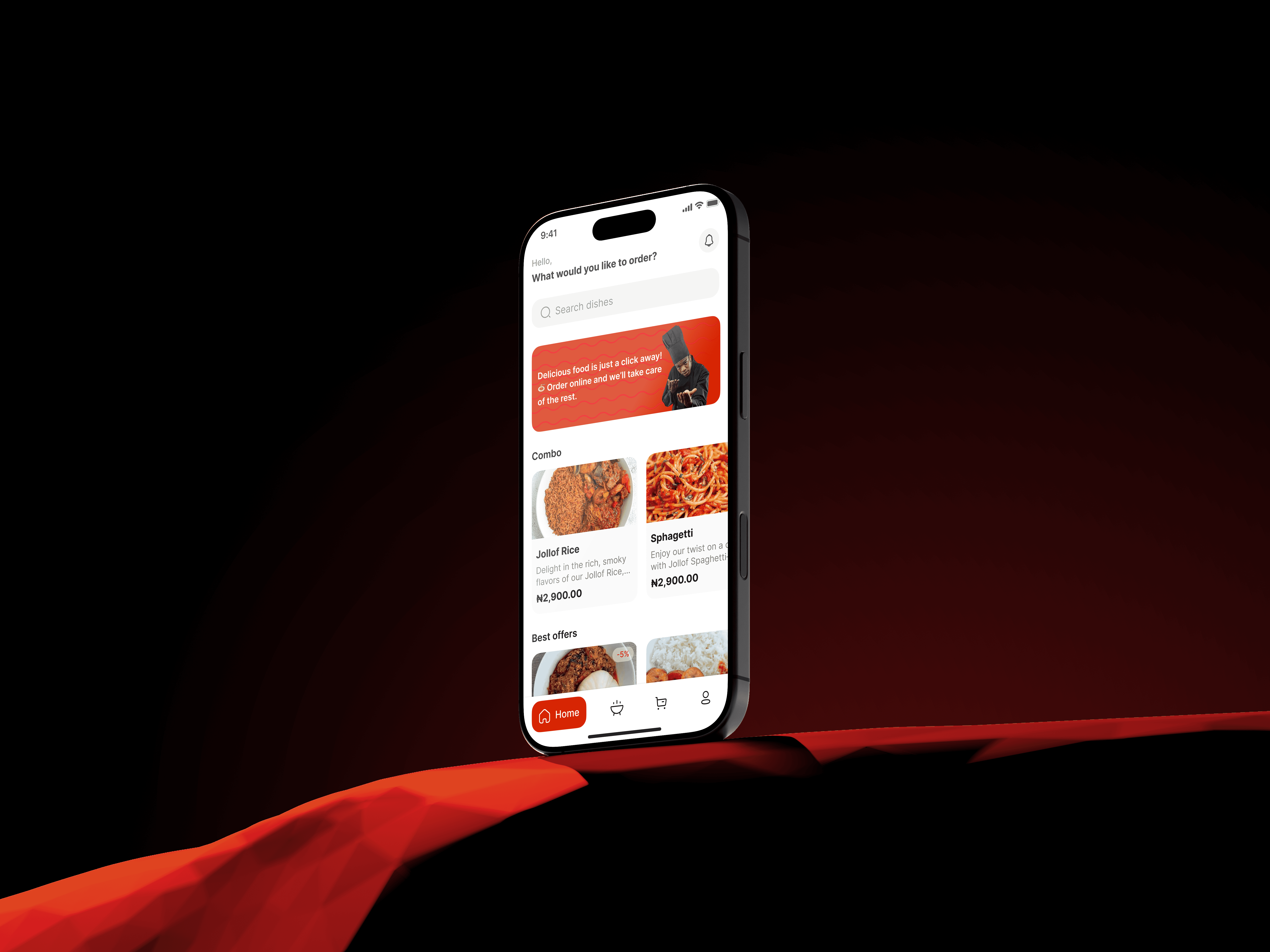
Food ordering application is a platform that gives users the ability to order mouth watering meals and also gift food to their loved one easily.
Role
Product Designer
Company
foodplug
Year
2024
Platform
Mobile Application
Challenge and Problem
In today’s fast-paced environment, users expect food delivery apps to be quick, reliable, and effortless. However, many existing solutions overwhelm users with cluttered interfaces, inconsistent experiences, and limited real-time tracking—leading to frustration and order abandonment. Restaurants, in turn, face operational inefficiencies caused by poor customer communication and limited visibility into the ordering process. Our goal was to design a mobile application that simplifies the ordering experience for users, reduces friction at every step, and empowers restaurants to deliver better service all through an intuitive, well-structured interface that balances aesthetics with usability.
The Need for the Design
With increasing reliance on mobile food delivery, users expect not just functionality but a delightful, stress-free experience. The need was clear: build an app that anticipates user behavior, reduces friction, and instills confidence at every stage of the order.
My Role in Designing the Mobile App
As the product designer, I led the full design cycle of the mobile application from discovery and research to wireframing, prototyping, and final UI design. My approach focused on empathy driven problem solving, ensuring that every screen and interaction aligned with user goals and restaurant needs.
Market Research
The food delivery industry in Nigeria is rapidly growing, driven by urbanization, increased smartphone penetration, and a shift in consumer behavior toward convenience. However, existing platforms like Jumia Food, Chowdeck, and Bolt Food primarily serve as multi-vendor marketplaces, focusing on volume rather than personalized service.
Key insights:
Many users express frustration with cluttered interfaces, inconsistent delivery experiences, and a lack of direct restaurant communication. Due to high commissions and limited customization, restaurants often struggle to manage orders efficiently on third-party apps. There is a market gap for single-restaurant apps that provide a streamlined, branded, and controlled ordering experience, which FoodPlug is designed to fill.
Opportunity Identified:
FoodPlug targets this gap by offering a custom-built mobile experience for a specific restaurant, allowing for:
- Better control of the customer journey
- Seamless tracking of orders and deliveries
- Integrated promotion and loyalty features
- Direct customer relationships without middlemen.
Design Process
Discovery & Research
To kick off the project, I conducted informal research to understand user behaviors and frustrations with existing food ordering apps
User Flow Mapping
With clear problem areas in mind, I created detailed user flows to visualize every step a customer takes—from launching the app to completing an order. This helped streamline the navigation and eliminate unnecessary steps.
Wireframing
Low-fidelity wireframes were sketched to quickly prototype the layout and structure of key screens. These wireframes served as the foundation for usability discussions and allowed early feedback on the overall direction.
UI Design
Once the wireframes were validated, I transitioned to high-fidelity UI design using Figma. My focus was on Consistency, Hierarchy, and Accessibility
Prototyping
Finally, I built an interactive prototype to simulate the complete order process, allowing stakeholders to experience the app flow firsthand. This prototype also served as a foundation for future usability testing and developer handoff.
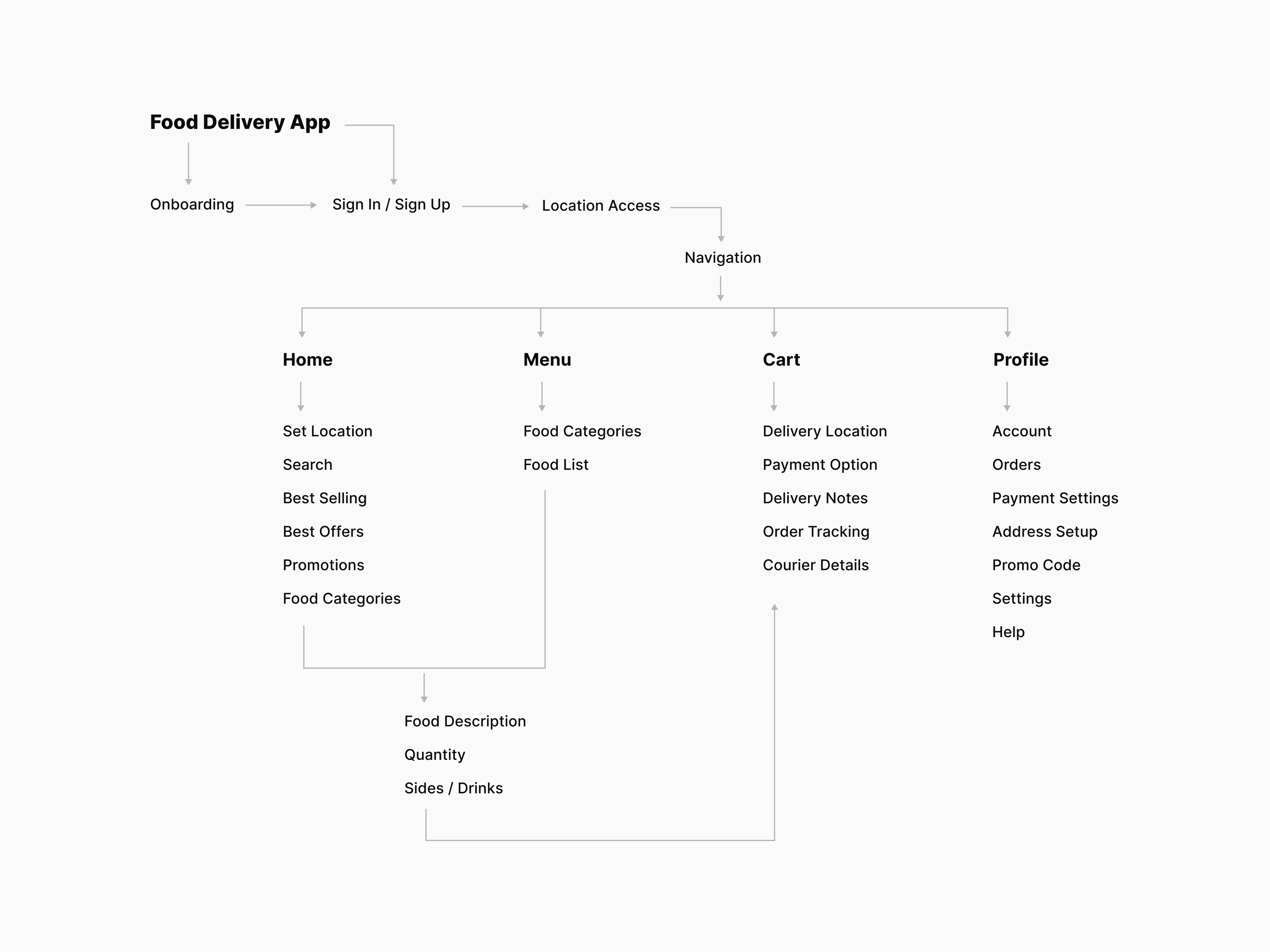
Userflow
The flow was designed to be simple, intuitive, and goal-driven, ensuring customers can place an order with minimal friction. It carefully maps out the journey from onboarding to order delivery, optimizing each step to reduce drop-off points and encourage repeat usage.
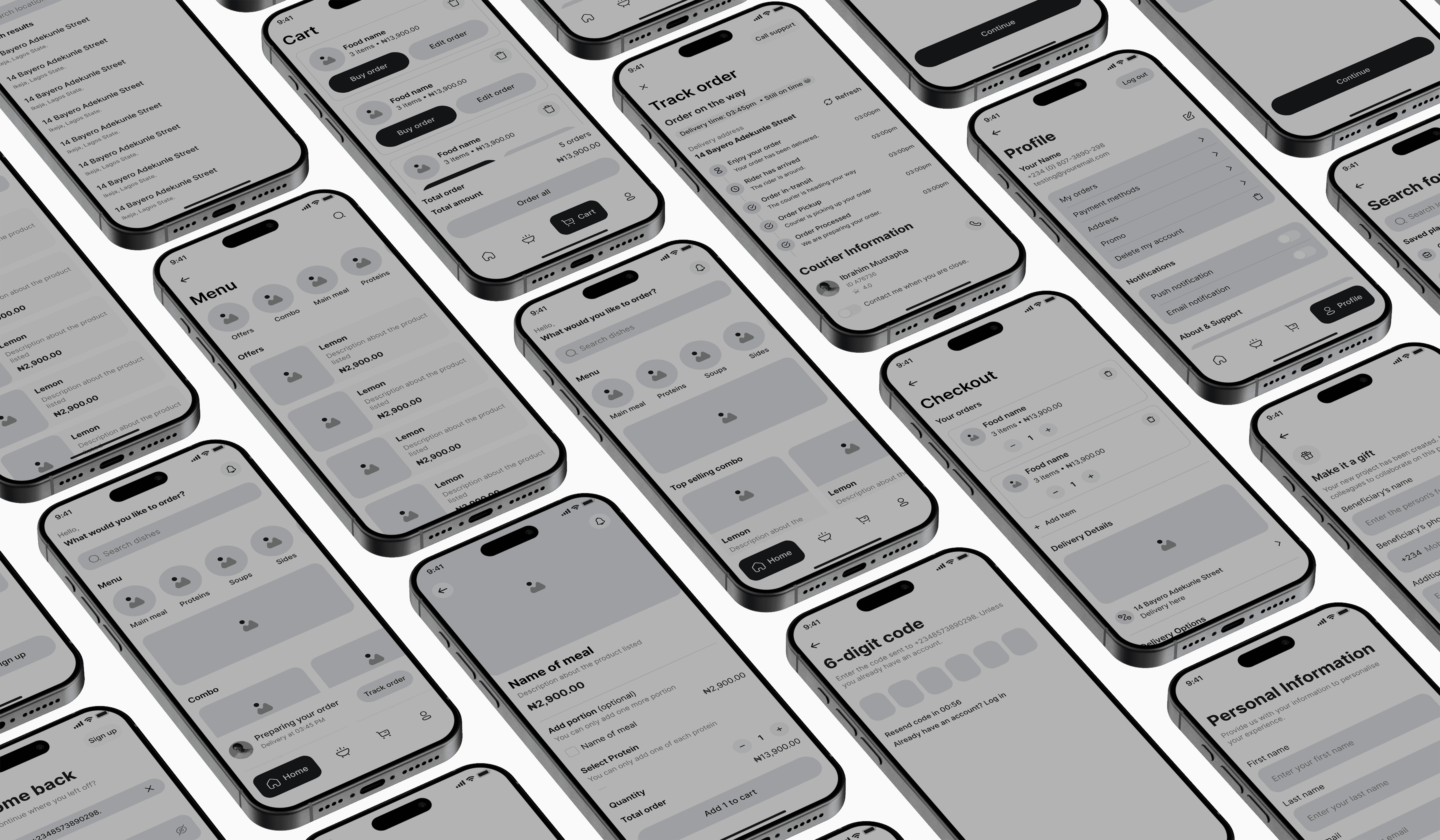
Low-fidelity
In the early design phase, I created low-fidelity wireframes to define the app’s structure and core user journey. Focusing on functionality over visuals allowed for quick iteration, early idea validation, and clear alignment with stakeholders, paving the way for a smooth transition into high-fidelity design.
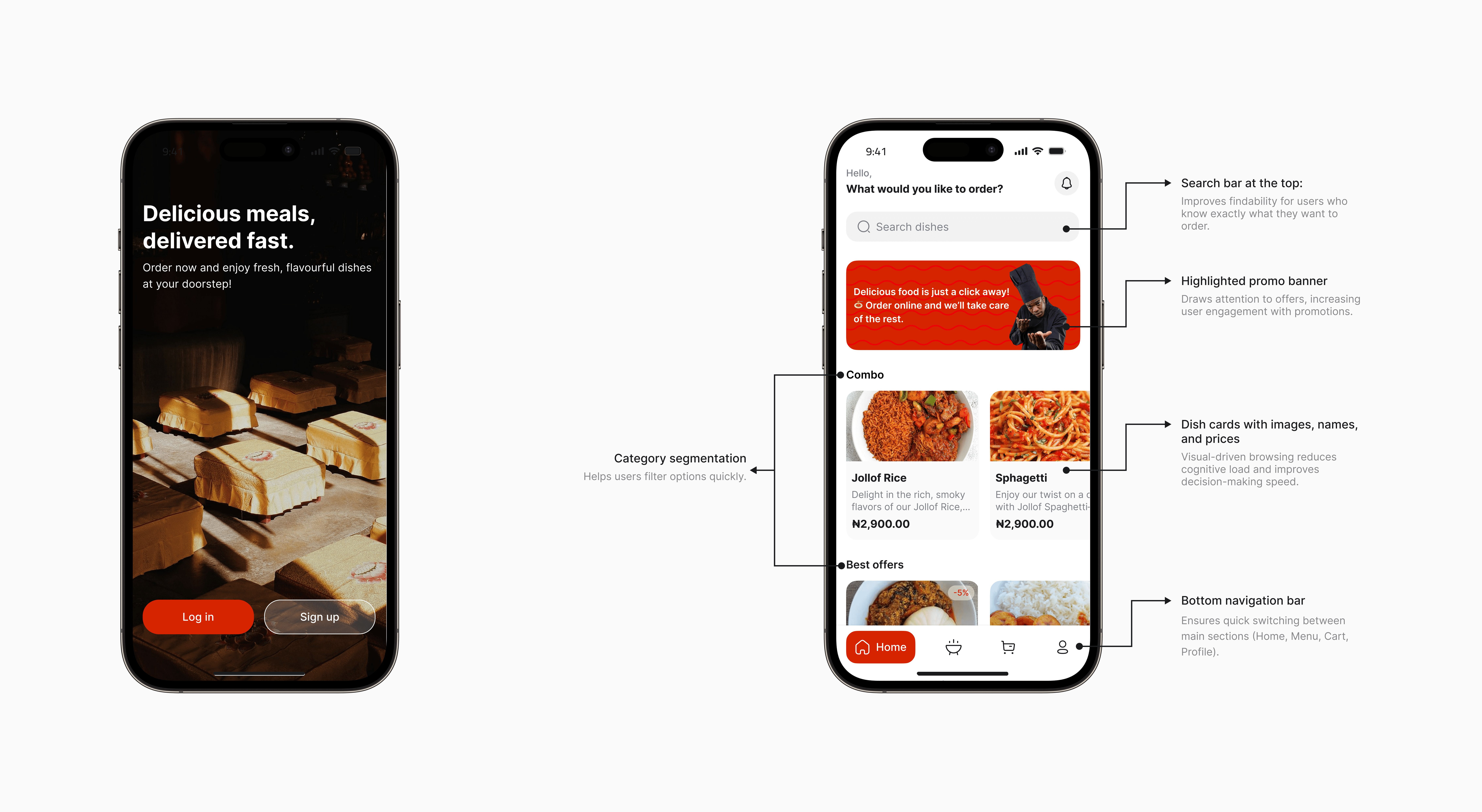
Hi- Fidelity
After validating the structure through low-fidelity wireframes, I dived into high-fidelity designs to bring the visual and interactive elements of the app to life. This stage focused on applying the design system, incorporating brand colors, typography, iconography, and consistent UI components to reflect the intended user experience. The high-fidelity design served as a near-final representation of the product, enabling stakeholders to interact with a realistic prototype and providing developers with a clear, structured reference for implementation.
Splash & Home — A Warm Welcome
The app greets users with a clear promise and an easy path to explore meals, search dishes, and dive into tasty categories.
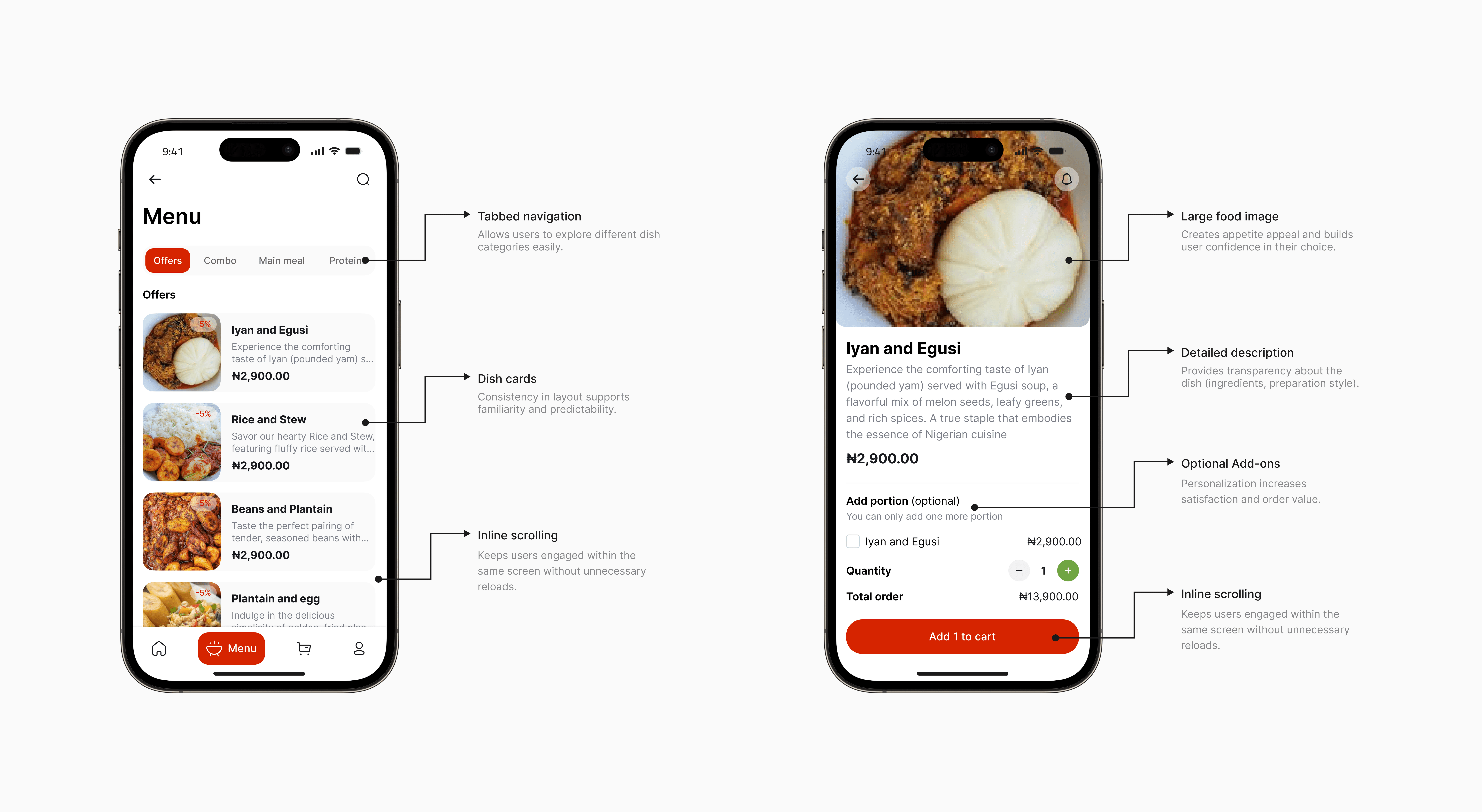
Menu & Dish Details — Discover & Personalize
From broad categories to detailed dish pages, users can explore flavors, read descriptions, and customize their orders with ease.
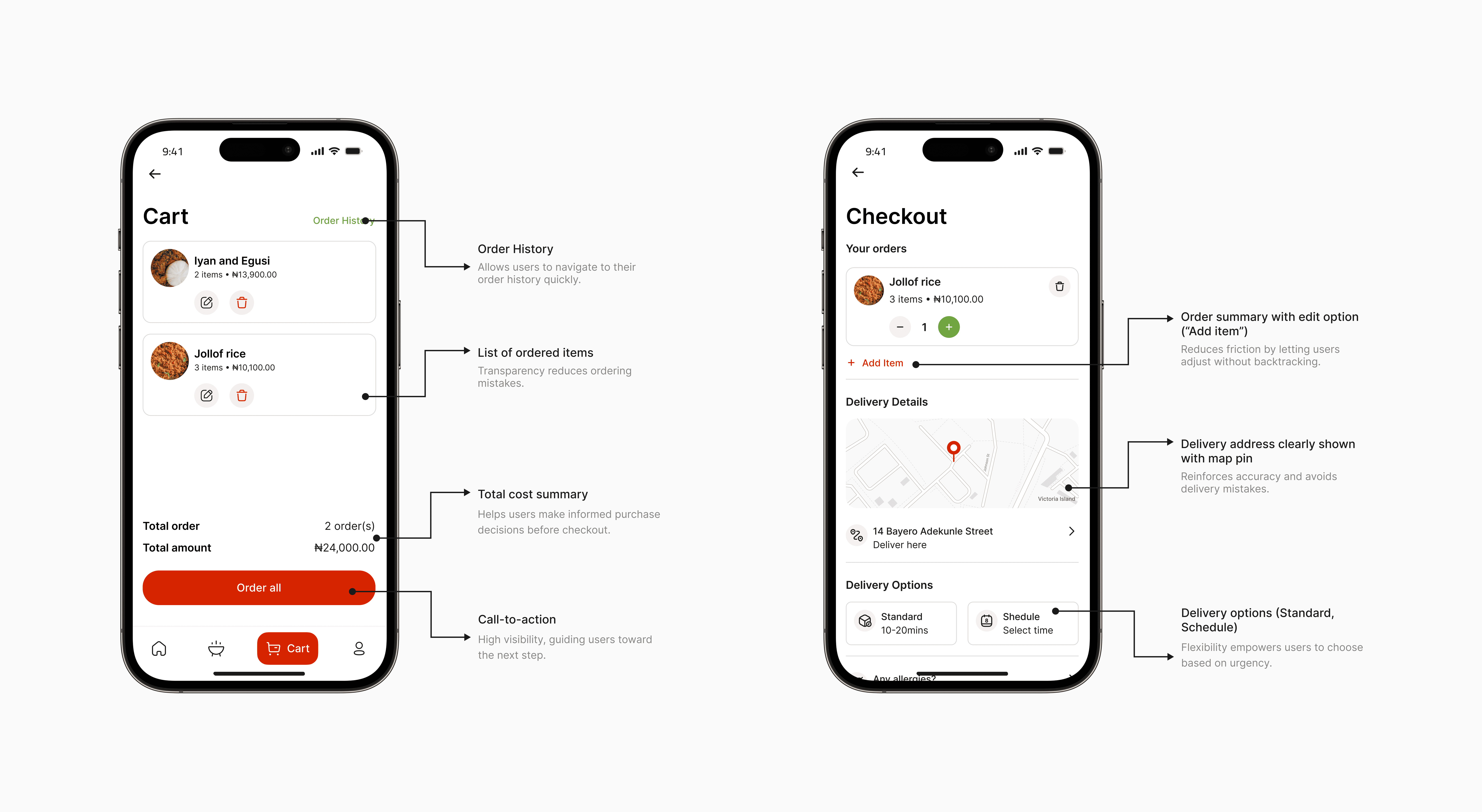
Cart & Checkout — Simple & Seamless
A clear cart view and smooth checkout flow make it easy to review, adjust, and confirm orders without friction.
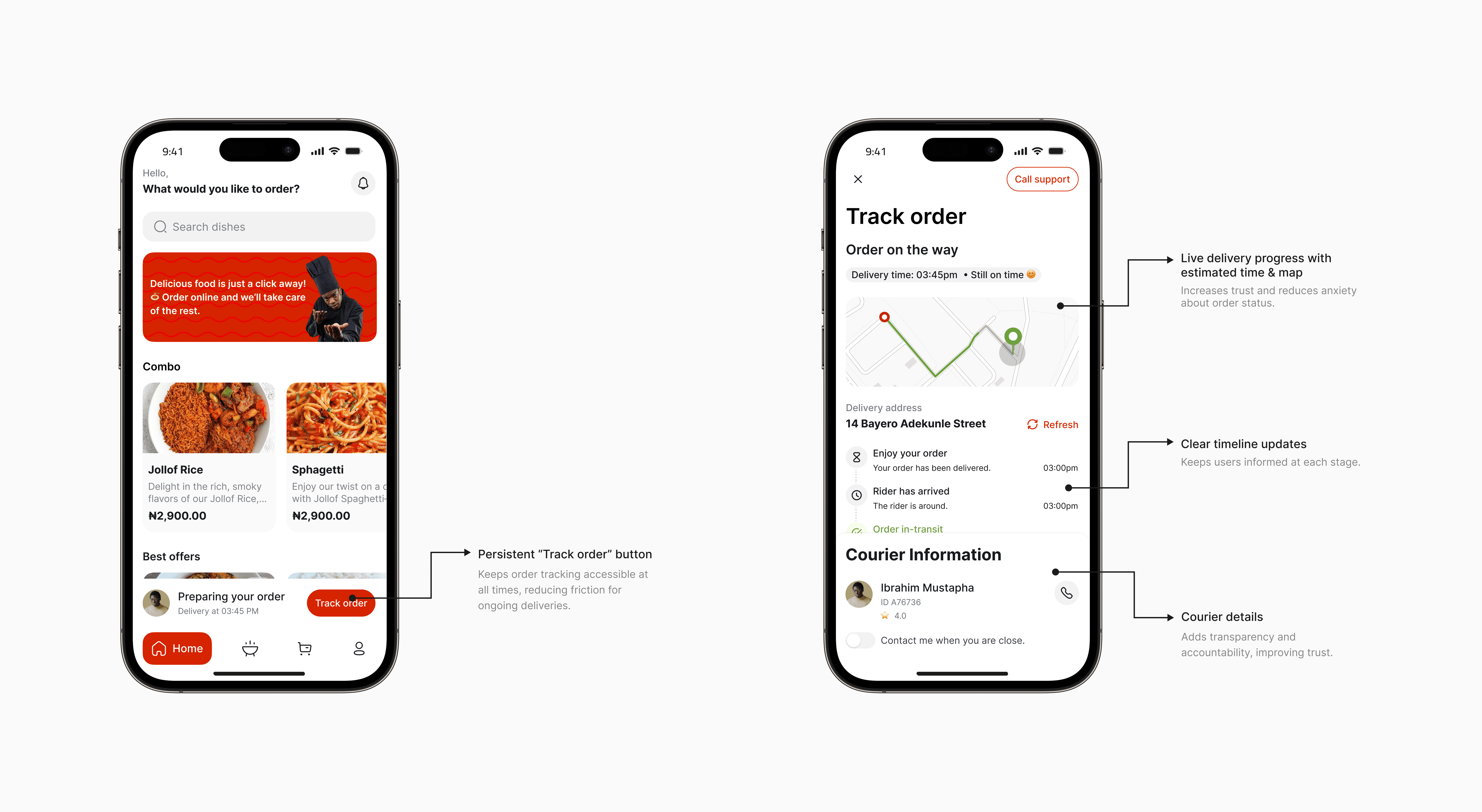
Order Tracking — Excitement in Motion
Real-time tracking keeps users informed and reassured as their meal makes its way.

Location & Profile — Made Personal
With saved addresses, promos, and account settings, the app adapts to each user’s lifestyle while keeping support close at hand.
Reflection & Key Learnings
Designing the food ordering mobile app was a rewarding experience that deepened my understanding of user-centered design in a fast-paced, real-world context. Through each phase, from research and wireframing to prototyping. I gained valuable insights into how design decisions directly impact usability, customer satisfaction, and business efficiency.
Key takeaways include:
1. Early user research is essential to uncover pain points and shape a relevant solution.
2. How simple, goal-oriented user flows can dramatically reduce friction in critical tasks like ordering and payments.
3. The value of iterative feedback and collaboration with stakeholders is ensuring the design remains aligned with user needs and business objectives.
This project reinforced my belief that great product design is not just about aesthetics—it’s about solving real problems through empathy, clarity, and thoughtful interaction.

👨🏾💻 Let’s build what users will love.
Available for roles, freelance projects, and collaborations.
Send me an email
©2025