
EasePay: Simplifying your financial journey
Revolutionises financial interactions by prioritising user-friendly onboarding and seamless financial management.
Role
UI/UX Designer
Company
Easepay
Year
2024
Platform
Mobile Application
Problem Statement
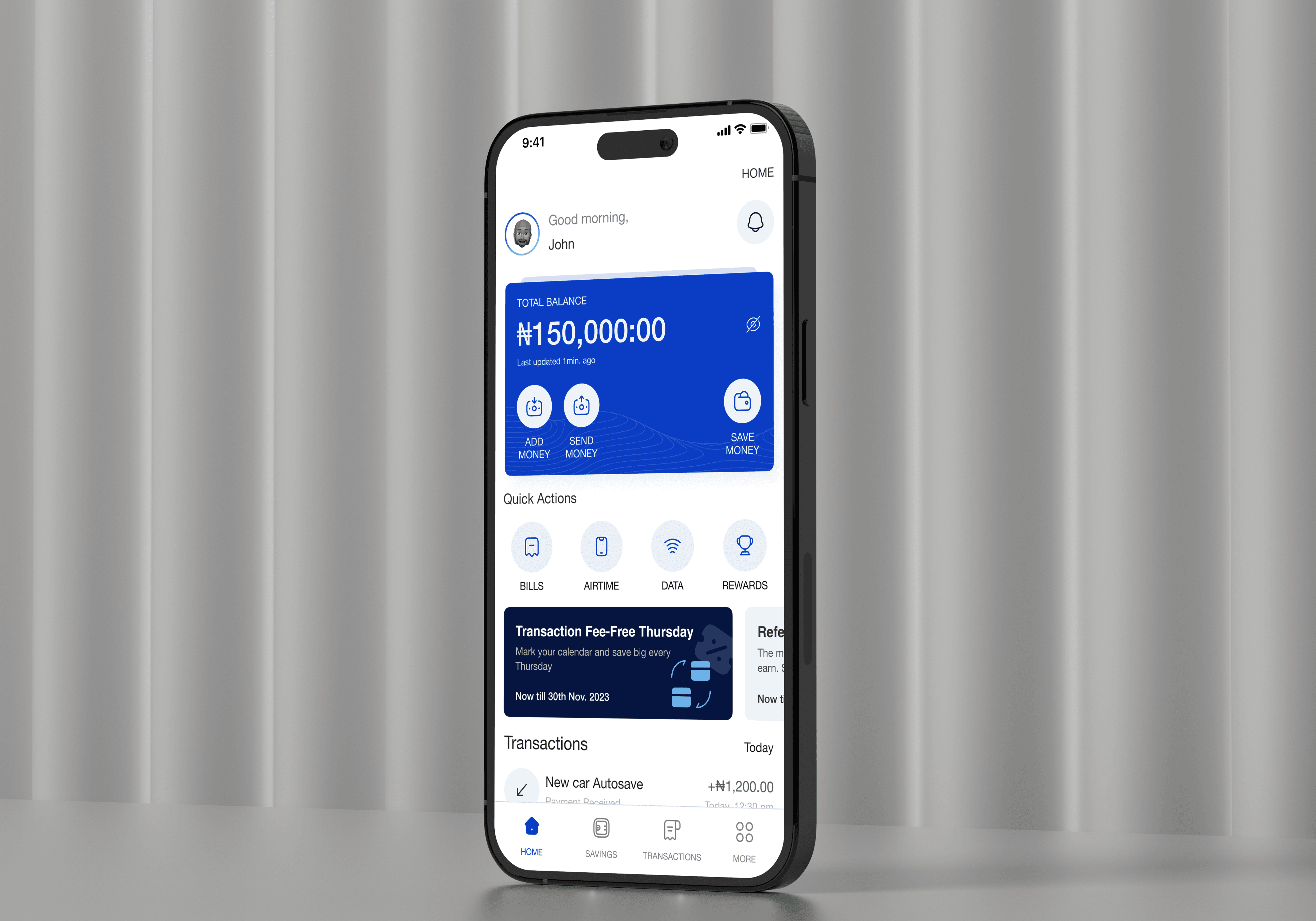
Traditional financial apps in Nigeria often come with complex onboarding, clunky interfaces, and disjointed transaction experiences. Users feel frustrated and overwhelmed, leading to a lack of trust and adoption. EasePay set out to solve this by providing easy onboarding, seamless transfers, and an intuitive design that puts the user first.
Hypothesis
If we design a financial platform with simplified onboarding, intuitive navigation, and secure yet seamless transactions, users will feel more confident, adopt the app faster, and rely on it for their daily financial activities.
The why
Managing money shouldn’t feel complicated or overwhelming, yet many people struggle with clunky processes, endless forms, and confusing platforms. With EasePay, we set out to change that story. Our goal is to take away the frustration and make financial interactions feel effortless—helping users sign up easily, transfer money without stress, and stay in control of their finances every step of the way.
User Research
Our research revealed key pain points and user expectations around financial apps in Nigeria. From surveys, we found that 70% of respondents felt KYC processes were too complicated, while 65% admitted to abandoning apps altogether after struggling with onboarding. At the same time, 80% emphasized the importance of transaction history tracking for effective budgeting. User interviews echoed these frustrations, with comments such as, “I just want something simple… no long forms before I can start,” and “I hate when apps freeze during transfers; it makes me feel unsafe.” Through empathy mapping, we saw that users often think, “I need control over my money,” but feel frustrated with complex processes, leading them to abandon apps that demand too much time. What they truly need are simple, fast, and trustworthy tools. From these insights, we learned that clarity and speed during onboarding are critical, transparency in transactions builds lasting trust, and personalization features—such as promos and savings goals—are highly valued for ongoing engagement.
Design Process
Discovery & Research
I began by listening to users and digging into their frustrations with existing financial apps. Through surveys and interviews, I uncovered key pain points around onboarding, trust, and ease of use, which set the foundation for my design decisions.
User Flow Mapping
With insights in hand, I mapped the ideal user journey. This helped me visualize how users would move through the app, ensuring every step felt natural, intuitive, and free of unnecessary friction.
Wireframing
speed and clarity—testing ideas quickly and aligning structure before investing in visuals.
UI Design
Once the foundation was solid, I shifted into high-fidelity design. Here, I focused on clarity, simplicity, and trust-building visuals that would make financial tasks feel approachable and reassuring.
Prototyping
Finally, I built interactive prototypes to simulate real use. This allowed me to validate the design with users, refine details, and ensure the experience was both seamless and engaging.
User Flow
We mapped the user’s journey from onboarding to daily transactions, keeping it simple and intuitive. Every step was designed to reduce friction and guide users smoothly. This ensured clarity and confidence in completing tasks.
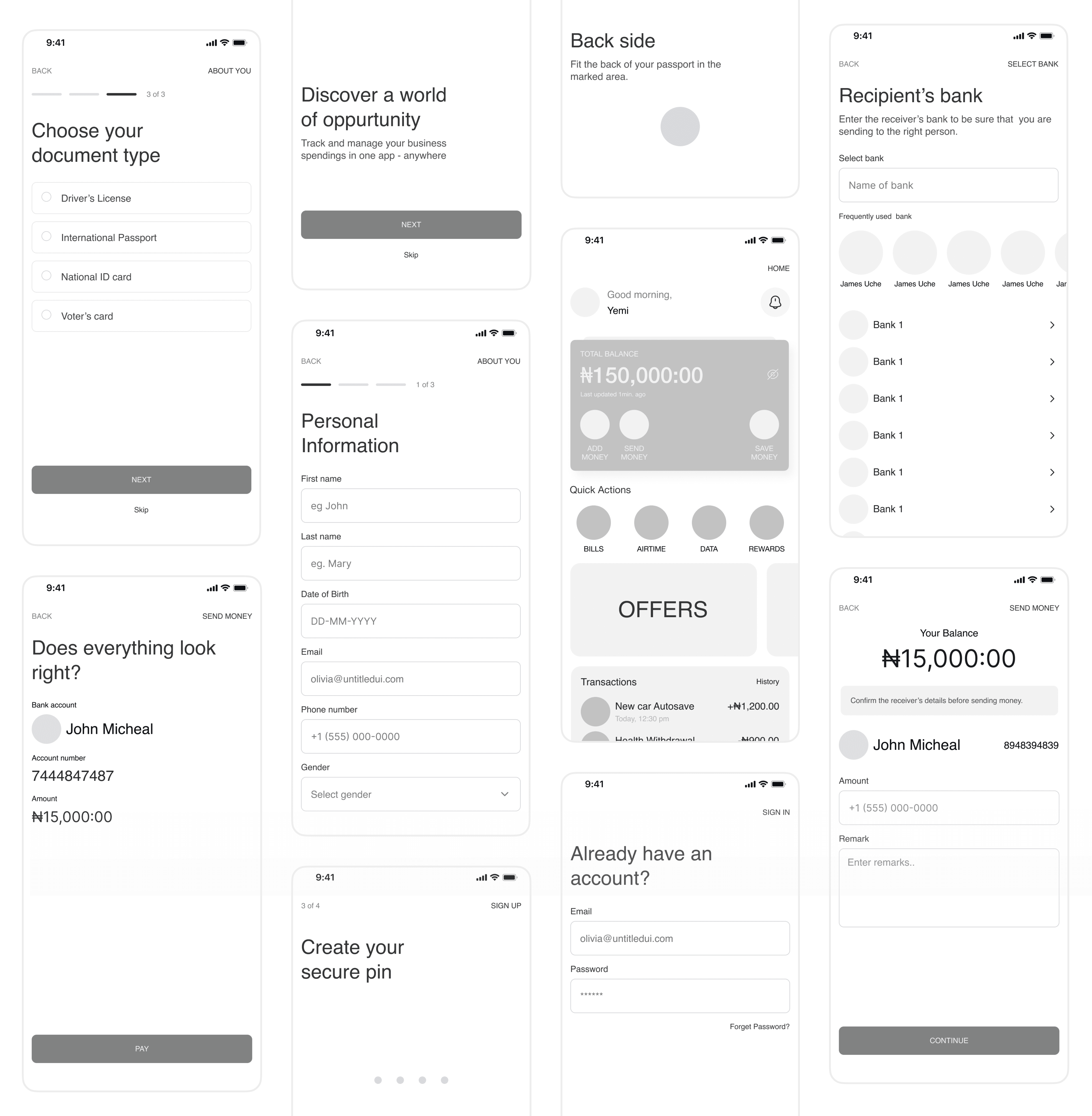
Low-Fi Wireframe
Starting with quick sketches, we focused on structure and usability over visuals. These wireframes made it easy to test ideas early. They helped us spot and fix issues before moving forward.
High-Fidelity Wireframes
We refined the designs with brand colors, typography, and interactions. This stage brought the app to life, showing users a near-final experience. It bridged the gap between concept and reality.
Assets & Components
We built a reusable system of icons, buttons, and colors for consistency. This kept the design clean and scalable across screens. It also made collaboration with developers seamless.
Reflection & Key Learning
Looking back, the project taught me the importance of balancing simplicity with compliance, listening closely to user feedback, and embracing iteration. Each challenge became a stepping stone that shaped both the product and my growth as a designer.

👨🏾💻 Let’s build products together.
I’m currently available for new opportunities and freelance projects . Let’s talk if you are looking for digital product designer.
Send me an email
©2025