
Rateflats: House hunting made easy
A platform for house-seekers to see realtime review on an apartment to make an informed decision about it
Role
UI/UX Designer
Company
Rateflats
Year
2023
Platform
Website
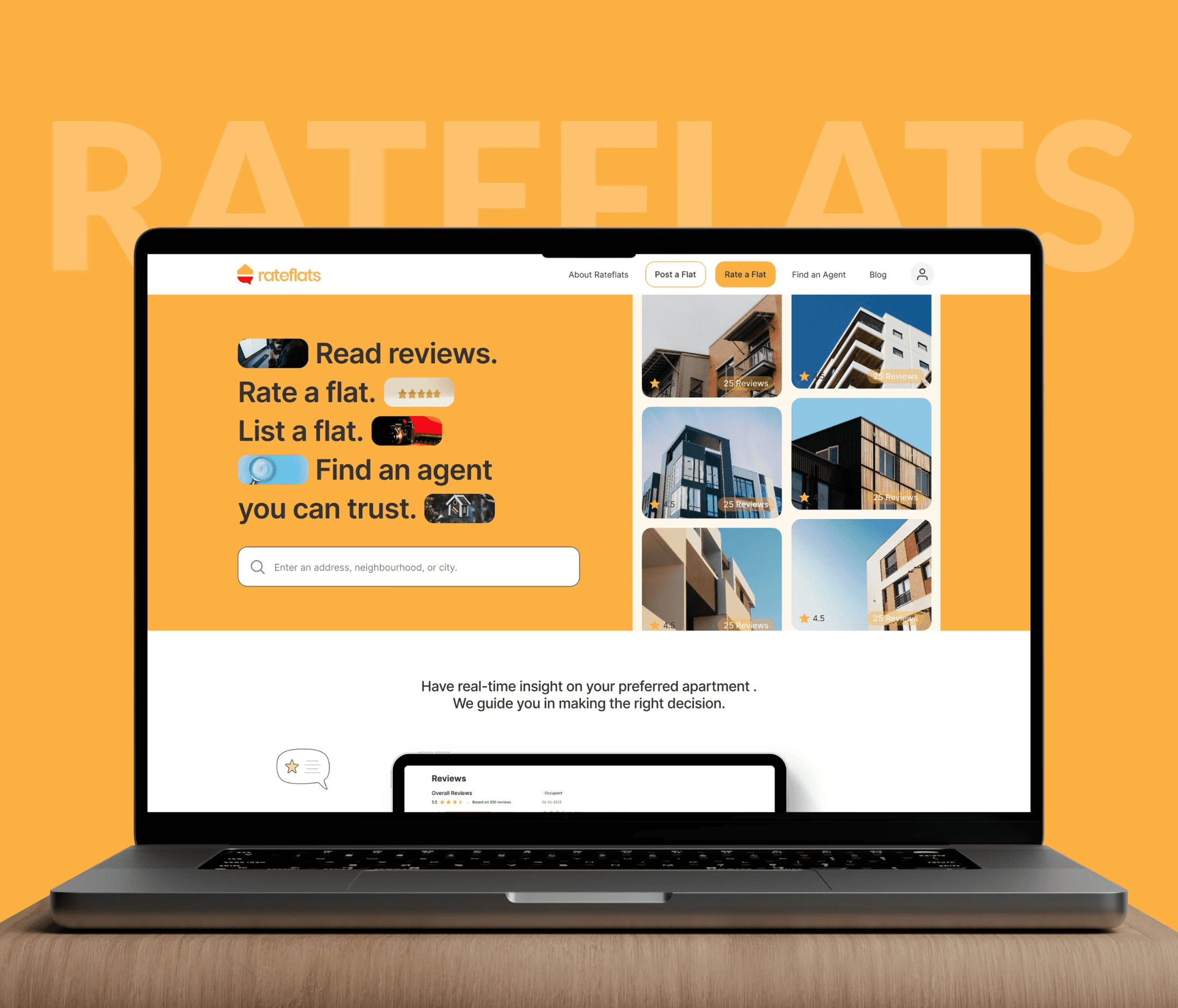
Stepping Into the Problem
When I first started working on Rateflats, I was struck by one uncomfortable truth: almost everyone I spoke to in Lagos had a painful renting story. In fact, seven out of ten people admitted they regretted at least one apartment they had rented. House hunting was expensive, filled with hidden charges, often frustrating, and usually left tenants feeling tricked. Many were misled by polished property photos or agents’ promises, only to discover water shortages, poor electricity, or safety concerns after moving in. The more I listened, the clearer the problem became: people were making one of the most important financial and lifestyle decisions of their lives with almost no trustworthy information.
Imagining a Better Way
If we could build a review-driven housing platform, similar to TripAdvisor but for rentals, we could: 1. Empower seekers with transparency. 2. Reduce instances of renter’s remorse. 3. Encourage landlords to improve their properties through feedback.
Defining What Success Would Look Like
For us, success wasn’t just about launching a platform; it was about changing behavior. We decided to measure progress through three lenses: 1. Engagement — were people submitting reviews and searching for apartments regularly? 2. Impact — did users feel more confident in their housing decisions? 3. Adoption — could we shift seekers away from depending solely on agents and word-of-mouth?
Listening First: The Research Journey
Before jumping into design, we needed to hear directly from those living this reality. We ran surveys and followed up with one-on-one interviews. The survey revealed that almost 70% of respondents regretted at least one rental choice. The most common frustrations weren’t just about money, but about trust: hidden charges, misleading property photos, and a lack of reliable information topped the list. Interestingly, over 80% of respondents said they would trust reviews from fellow tenants far more than from agents or landlords. Interviews gave these numbers a human voice. One tenant told me, “I wish someone had warned me about the flooding before I signed.” Landlords, on the other hand, saw potential value in feedback, recognizing that better transparency could help them attract credible tenants. From these insights, we mapped out empathy models to capture what tenants see, think, feel, and do during the housing process. The common thread was clear: people craved transparency and reassurance.
Shaping the Design
The design process was iterative and hands-on. There were a few pivotal moments: 1. We opted for star ratings on core housing aspects because users told us they wanted quick snapshots, not long essays. 2. We emphasized anonymity and credibility as dual anchors. Anonymous reviews encouraged honesty, while verified properties and agents reassured seekers. 3. We kept the UI clean and simple, avoiding clutter to ensure trustworthiness wasn’t undermined by design noise. The visual system leaned into soft neutrals with bold accents for ratings, ensuring that reviews stood out as the centerpiece. The prototype built in Figma captured the entire journey—from searching to rating—and gave stakeholders a tangible sense of how Rateflats would feel.
Key Learnings
Looking back, the biggest challenge wasn’t designing the interface—it was designing for trust. Every decision, from anonymity to verification, had to balance honesty with credibility. What I learned was that good design is often invisible; it’s not about flashy visuals but about creating an environment where users feel safe, understood, and empowered.

👨🏾💻 Let’s build products together.
I’m currently available for new opportunities and freelance projects . Let’s talk if you are looking for digital product designer.
Send me an email
©2025